Retaining Walls and Masonry for Sloped High-Desert Lots
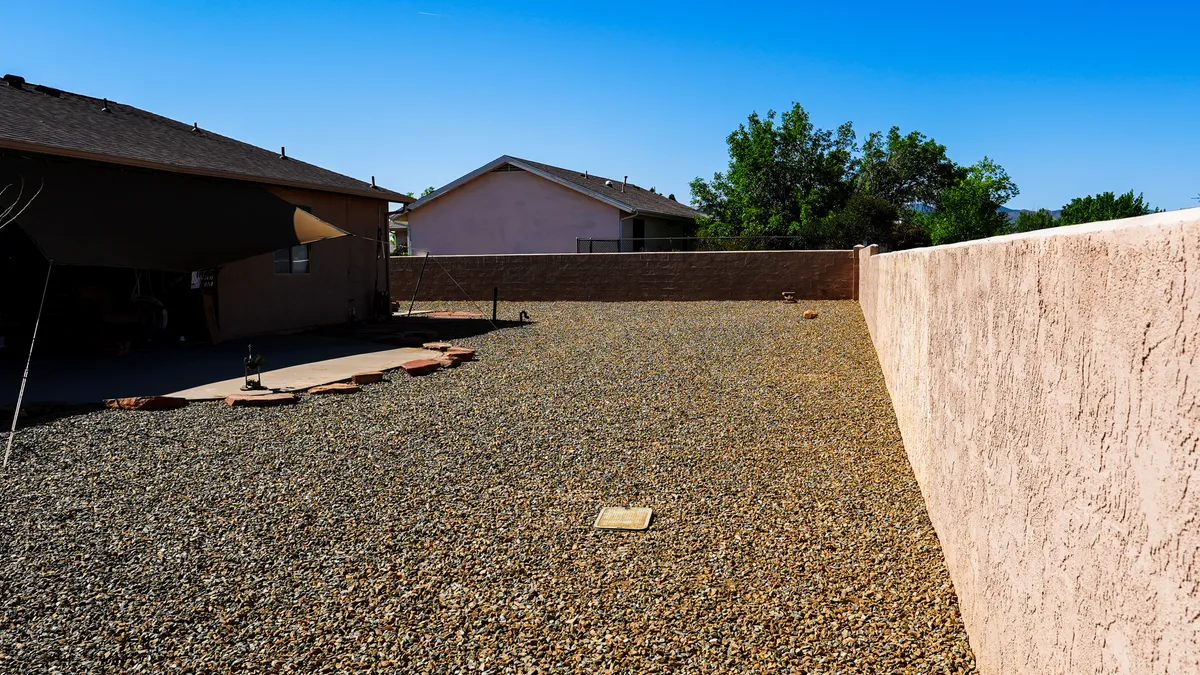
Plenty of lots around Prescott come with a view, and the view usually comes with a slope. On rocky high-desert ground, that grade can mean lost yard space, soil that washes out in a monsoon, and a backyard you cannot really use. A well-built retaining wall, backed by solid masonry and smart drainage, turns that hillside into flat, functional space that holds its ground for decades.
Why slope and erosion are a real problem here
Northern Arizona ground is a mix of decomposed granite, clay, and rock. It drains unevenly, shifts with freeze and thaw, and moves fast when heavy monsoon rain hits a bare slope. Left alone, that slope keeps creeping downhill a little more every season.
Erosion does not just cost you soil. It can undermine patios, foundations, driveways, and septic components, and it carries sediment into places you do not want it. A retaining wall holds the grade in place and gives water a controlled path instead of a free-for-all.
What an unmanaged slope tends to cost you
- Usable yard space that stays too steep to enjoy
- Topsoil and landscaping that wash out during storms
- Water pooling or running toward the house and hardscape
- Gradual movement that stresses nearby structures
How a retaining wall actually earns its keep
A retaining wall is a structural element, not just a stacked-looking garden border. It resists the lateral pressure of the soil behind it, which is a surprising amount of force once that soil is wet and heavy. That is why build quality matters more than looks.
Done right, a wall creates a level bench above or below it. That new flat area becomes a patio, a lawn, a garden, a parking pad, or a safe play space. In other words, the wall is not only protecting the lot, it is giving you square footage you did not have before.
Drainage behind the wall is half the job
The most common reason a retaining wall fails is water, not weight. When water collects behind a wall with nowhere to go, it adds hydrostatic pressure and can push even a heavy wall out of line over time. Good drainage relieves that pressure before it ever builds up.
A properly built wall includes a drainage system behind the face so water moves through and away rather than sitting against the back of the wall.
What proper drainage usually includes
- A free-draining gravel backfill zone behind the wall
- A perforated drain pipe at the base to carry water off to daylight
- Filter fabric to keep fine soil from clogging the gravel
- Weep openings or outlets so water has a clear exit
Skipping these pieces is how a wall that looks fine on day one starts leaning a few seasons later. We build the drainage in from the start because it is far cheaper than a rebuild.
Footings and base preparation set the lifespan
Everything a wall does depends on what is under it. On our rocky lots, that means digging down past loose or disturbed material to firm, stable ground, then building a compacted base that spreads the load evenly.
For mortared block and stone walls, that often means a proper concrete footing sized for the wall height and soil conditions. For segmental and dry-stacked systems, it means a well-compacted granular base and a dead-level leveling course, because the first row controls every row above it. Either way, the prep you cannot see is what keeps the wall straight for the long haul.
Base work we do not shortcut
- Excavating to undisturbed, load-bearing soil
- Compacting the base in lifts rather than all at once
- Setting footings below frost depth where conditions call for it
- Getting that first course dead level before anything stacks on top
Block, stone, and segmental wall options
There is no single right material. The best choice depends on wall height, the look you want, the soil, and the budget. Here is how the common options compare for high-desert lots.
Segmental retaining wall block
Interlocking concrete blocks are engineered specifically for retaining soil. They go up efficiently, handle curves and corners well, and many systems use geogrid reinforcement tied back into the hillside for taller walls. They are a strong, cost-effective workhorse for most residential grades.
Mortared masonry and natural stone
Block faced with stone, or full natural stone laid by hand, gives you a permanent, high-end look that suits the landscape here. These walls lean on true masonry craft, and our team includes a master mason who builds them to last. Mortared work pairs well with matching steps, columns, and seat walls for a finished outdoor space.
Poured concrete and CMU
For maximum strength on tall or heavily loaded walls, a poured or block concrete wall engineered for the site is hard to beat. It can be veneered later to match the rest of your hardscape, so you get the structure without giving up the look.
Terracing a slope into usable space
When a slope is too tall or too steep for one wall, the better answer is often a series of shorter walls stepped up the hillside. Terracing breaks one big grade change into several manageable levels, which reduces the load on any single wall and creates multiple flat areas you can actually use.
Each terrace can have its own purpose, and the transitions between them are where paver steps, pathways, and planting beds tie the whole design together.
What terracing can open up
- Level garden beds and raised planters on a formerly unusable hill
- Stepped patios and seating areas that follow the land
- Safer, gentler paths between the house and the yard
- Better control of where storm water flows down the lot
Why engineering and build quality matter
Taller walls, walls holding back a lot of soil, or walls supporting a driveway or structure are not a stack-it-and-hope project. They may need engineering to confirm the design handles the real loads, and in many cases they need permitting. Getting that right protects your property and the people who use it.
As a KB-1 Dual Building Contractor, ROC #359130, we build walls that are structurally sound, properly drained, and finished to match your home. The Feist team approaches every wall the same way whether it is a two-foot garden terrace or a reinforced wall holding up a yard, because a retaining wall only does its job if it does it for decades.
Ready to tame your slope
If a sloped or eroding lot is costing you usable space, let us take a look. We serve Prescott, Prescott Valley, Sedona, Cottonwood, Mayer, and Flagstaff, and as a veteran-focused contractor we are proud to hire and empower veterans on every crew. Call (928) 776-3020 for a free phone quote. We also offer a $75 on-site estimate that is credited toward your project when you move forward.